RSVP

In these days when much of our communication is digital, I’m sure I’m not the only person who misses the thud of a fat envelope on the doormat containing a long, news filled letter from a friend or relation.

A WhatsApp message, even one full of pictures, just isn’t the same. I like to read a person’s reactions to the things going on in their life, the minutiae of their ordinary days as well as the glamour and excitement of their special days.

Much of what comes via the post now is unwelcome news: of ever-increasing bills to be settled or catalogues full of ‘stuff’ we don’t need or want but can’t seem to Unsubscribe from, however hard we try!

Image from istockphoto.com

One arrival which is almost always very welcome though, is an invitation. That might herald the enjoyment of a wedding, special anniversary, a birthday celebration, perhaps a reunion with friends from school or university, the chance to meet with rarely seen family and friends, enjoy celebratory food, perhaps buy some new clothes.

An invitation, whether printed on stiff embossed card or hand drawn by a young family member is something to be displayed with joy and anticipation as the big day approaches.

Such invitations don’t come every day and sometimes when we’re feel unwell or just generally low and the daily routine is becoming too monotonous, how we long for an invitation to something exciting to come through our door.

Sometimes we might find ourselves with too many invitations. The prospect of going to yet another wedding or other celebration may be the last thing we feel we need when we’ve had lots of events crammed into a short space of time and all we want is some time to relax in comfortable clothes, eat simple meals and enjoy our own company.

Yet there is one invitation which is never unwelcome. It’s never delayed, it doesn’t arrive on an elaborately decorated card or through a WhatsApp message, a text, or an email. It doesn’t arrive just once a day with the mail; in fact, it’s rarely in written form. Yet it’s with us all the time, just waiting for us to respond to.

It’s the ever-present invitation from Jesus to be his partner in the daily work of his kingdom. Being his eyes and hands in the world for this moment, this hour, this day and all the days to come. What could be more exciting?

We each respond differently. Sometimes in practical ways such as driving someone to an appointment or collecting shopping for them. At other times perhaps making a phone call to that person we’ve not spoken to for some time but who we know can get lonely and depressed, or perhaps simply sitting alongside someone, placing an arm round their shoulder as they share difficult news. Or, perhaps, praying for someone who is going through a difficult time.

This invitation doesn’t involve travel necessarily. Nor do we need to buy special clothes or gifts. We can wear what we like and Jesus has given us all the gifts we need to bring to the people and situations he’s inviting us to connect with. And, of course, our positive response to this invitation may encourage those we help to respond to Jesus’s invitation to them.

I’m happy to be known as someone who is one of Jesus’s invitees. That’s one ‘list’ I won’t choose to Unsubscribe from!

What are you being invited to do or to be today? Whatever it may be, your RSVP will be the most important thing you do.

The Shadows We Cast

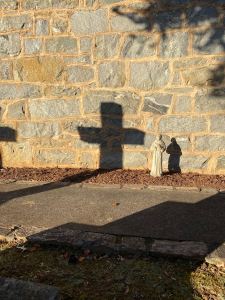
Photos by Christian Lendl and (below) Tristan Maness @ Unsplash.com

Aren’t shadows fascinating? We all project a shadow when we walk or sit in a strong light which throws our body shape onto a hard surface, usually the ground or a wall. Who remembers making animal shapes using their fingers and throwing them onto the wall by the light of a film projector or bedside light? Precious memories.

How fascinating children find it when they see their own shadow. Suddenly they’ve ‘grown’ to two or three times their actual height. Then, if they change position in relation to the light, it will look as though they’ve shrunk.  And how magical it seems to them that, wherever they go within range of the light source, their shadow goes with them.

As adults, though, we may not like the fact that our shadow reflects not just our changing size but also our changing shape as we get older. A shadow can be a really dark mirror at times!

Shadows can also be mysterious, even frightening. The corners of a room hold shadows: around and behind furniture, for example. I remember, as a child, peeking into an unused room in a friend’s house, both of us screaming as we egged one another on to cross the threshold and walk among the white sheeted furniture. We weren’t looking at shadows exactly, because the windows were shuttered so there was only minimal light but we were frightened by the hard to recognise shapes; familiar things seen in an unfamiliar way.

Or think of old black and white movies where a stranger (usually hatted) pursues the main character down a darkened alley, their shadow projecting onto its brick walls.

These are visible shadows. What about the things which we each carry with us which can’t be seen but which still cast a shadow? We all have things we keep hidden away in the corners of our lives; things we don’t want to bring into the light.

Yet they can still follow us around. Our personal darknesses, as attached to our feet as our physical shadows are: the shadows of personal failures, losses and regrets, broken relationships, wasted opportunities, poor physical or mental health.

Each of these shadows will have had some impact on us and the version of ourselves that we present to other people. At one moment they can seem far away, then and often without warning, they catch up with us and we realise that they’ve been alongside us all the time and that we’re still living with their consequences.

There is one shadow, though, which if we allow it to cover our lives, creates light and not darkness. That shadow is the shadow cast by Jesus’ cross. The darkness of the crucifixion resulted in the light, joy and hope bought by the Holy Spirit coming into the world.

We’re each called to carry that glorious ‘Son’ light (which never darkens) and use it to help dispel the shadows in the lives of people we meet. I don’t understand the science but apparently as light moves towards an object, the shadow it creates becomes larger. Jesus’s light works in reverse, the closer his light gets, the smaller our own and other people’s personal shadows become.

As children we may have made animal shapes on a wall which disappeared as soon as playtime ended but the shadows we cast as adults can have a much more permanent, life changing impact.

Who could you cast the shadow of Jesus onto today?

“Um….. er”

Photo by Ismael Paramo @ Unsplash.com

May I start this post with a personal question? Are you an ‘um’ person or an ‘er’ person? We all recognise those hesitations and the situations in which they happen: when we’re feeling nervous, answering a difficult question or just playing for time. We’ve all been an um’ or an er’ person at some time haven’t we?

Hesitations can be annoying, even embarrassing but one situation where hesitations don’t matter is when we’re praying. We can hesitate as often as we need to. We can also stumble, repeat ourselves, get frustrated, even get angry.

None of that matters because God always knows what we want to say, even before we’ve started trying to say it, even when we can’t find what we think are the right words.  

Going back to ‘um’ and ‘er,’ I’ve always been an ‘um’ person but I discovered recently that, in one very important way, I’m an ‘er’ person. And you are too ….

I was sitting in the chapel in my local church. In front of me was a table with a box for people to drop prayer requests into, together with some blank cards for them to write their requests onto.

Next to the box was a partly obscured label which I read as saying ‘Pray Cards.’  I realised that it actually says ‘Prayer Cards’, my brain almost instantly supplying the missing ‘er’ but it opened an interesting train of thought.

We call people who run ‘runn – ers,’ people who swim ‘swimm – ers’, people who write are ‘writ – ers’; there are, of course, many other examples.

I’m definitely not a runn – er and I’m a very slow and rather splashy swimm – er but I would call myself a pray – er: people who pray must be pray – ers, right?

But, see what happens when you put the two parts of the word pray – er  together. You get the word prayer. If I’m a pray – er, then I’m also a PRAYER. What an amazing thing to be!

What a wonderful calling each of us has. All of us who pray, however inexpertly and whether individually or with other people, have this in common. As well as being pray – ers, we’re all living, breathing prayers.

As we walk past a homeless person in a shop doorway, stop and admire (and feel out of breath at) the stamina of runners pounding the local pavements or sidewalks, bow our heads as a funeral cortege passes on the street, read the papers or follow a news bulletin, we’re bringing prayer to that situation even when we’re not consciously praying. We simply are prayers.

Let’s go through our lives, coming alongside others as a prayerful presence, without any hesitation or uncertainty. We don’t need any special skills or training.

It doesn’t matter whether you’re an ‘um’ person or an ‘er’ person; someone who sometimes forgets what they want to say next or can’t find the right words to use.

Simply be …… and the world will be richer for you and your amazing life as a living prayer.

Amen.

Psalm 23 (and a half)!

Photo by Rod Long @ Unsplash.com

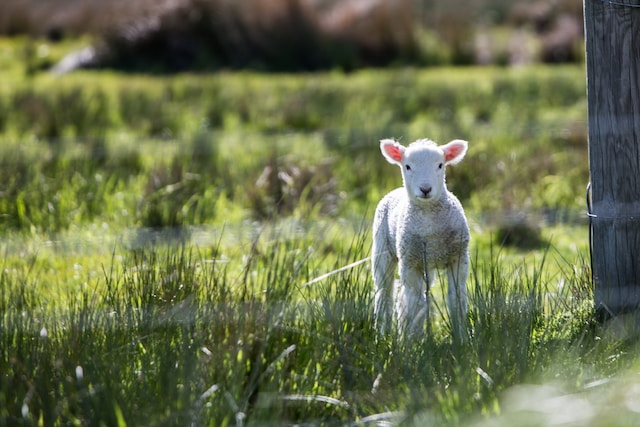
As the evenings lengthen and spring appears, local fields are full of sheep with their lambs. I’ve just driven past such a field and even through the fairly heavy spring rain which was falling, it was lovely to see the mothers watching over their lambs and the lambs seeking the shelter of their mothers’ bodies.

Last year, at a prayer and fellowship group, we were asked to bring along our favourite version of the 23rd psalm or to write something inspired by it.

Looking at the beginning i.e. The Lord is my shepherd, I realised that if He is my shepherd, then I am one of His Sheep. With that in mind, I rewrote the psalm from the viewpoint of one of His flock.

Here’s what I wrote:

I’m loved by the Lord. Yes, he loves even me, the rather scruffy, almost black sheep of His flock, the one who’s hardly ever still – in body, mind or spirit.

Every so often, He makes me stop and realise that I need to take some time out and just enjoy lying down in the calm of His presence.

When I do, He guides me to the coolest, most beautiful part of the pasture to feed on the best grass and to drink from the clearest, most tranquil streams.

He never expects me to get up quickly and trudge back to my sheepy existence, but allows me to take all the rest and refreshment my woolly soul needs.

When the flock moves, I’m the sheep who doesn’t really want to follow the main path, but rather wants to explore all kinds of enticing detours. That really gets me into trouble sometimes!

I’ve often needed to be rescued from a tangled forest or a sheer, steep path when I haven’t been able to see the way back to safety.  How wonderful He is for never giving up on me, always coming to find me and gently nudging me in the right direction.

Even when I’ve had to walk through some dark, sad times; even when I’ve felt totally alone, despite being in the middle of a pushing, fractious flock, I’ve not been afraid.

My Lord, my shepherd, is always there, with His love and compassion to strengthen and pacify me.

Lord, how wonderfully you care for this greying, curly haired, feebly bleating creature. When others turn on me, you lead me away to shelter, feeding me with the most wonderful treats, many more than I could expect or imagine, yet always exactly what I need at that time.

You are my beloved shepherd. As a beloved but fairly simple sheep, I don’t have the words to express how that feels but I know that you know how I’m feeling.

Lord, you are, and you will always be, behind each of my faltering steps along life’s path.  Help me not just to look behind me and to the side for your loving support and care each day, but ahead so that, going forward I can follow You, shepherding others into your flock until, at the end of my days, I will be with You for ever and taste your heavenly pasture. 

Amen.

I Followed Women

I followed
Awakened by instinct
As dawn broke.

I followed women
Keeping respectful distance
As they wound through quiet streets.

I followed women quietly
Slipping through sun’s strengthening rays
As they left the sleeping city.

I followed women quietly clustered
Curious about their destination
As they hurried furtively.

I followed women quietly clustered close
Carrying jars and cloths
As they came near Golgotha.

I followed women quietly clustered close together
Whispering urgently
As they entered the dew dropped garden.

I followed women quietly clustered close together, stopping,
Drawing back
As they neared their destination.

I followed women quietly clustered close together, stopping, confused
Before the open cave
As they realised the stone removed.

I followed women quietly clustered close together, stopping, confused, distraught
Cowering in the entrance
As they absorbed its wonder.

I followed women quietly clustered close together, stopping, confused, distraught, hearing
Heavenly tones
As angels told them Christ was risen.

I followed
Still at respectful distance
As they rushed to the city.

Why did I follow? What happened there?
Should I believe what I’d heard?
I had to look in, I just had to see
Sunlight stream through deep shadows

And, yes, God was there
In that bright, empty tomb
He’d called me to witness it all,
I felt Him touch me, He helped me to see
And to know why I follow this man.

I Followed a Man

I followed
As a donkey carried a man
Along a coat strewn road to Jerusalem

I followed people
As they pushed and jostled
One another towards Jerusalem

I followed people surging
As they shouted “Hosanna”
Along the triumphant road to Jerusalem

I followed people surging through city streets
As they argued about the man
Who’d led them to Jerusalem

I followed people surging through city streets clamouring
As, at dead of night, they searched
For the man now condemned in Jerusalem

I followed people surging through city streets clamouring to watch
As they mocked and then stripped him
For crucifixion outside Jerusalem

I followed people surging through city streets clamouring to watch the end
As the blood flowed and the life ebbed
From that man on the cross near Jerusalem.

I followed people surging through city streets clamouring to watch the end of his life
As, surrendering all to his God,
That man called Jesus died.

I followed
As people dispersed, both arguing and tearful
And we retraced our steps to Jerusalem

*******************************************************

Why did I follow? Why followed that man
As he agonised slowly through death?
I didn’t know him and he couldn’t know me,
A curious face in a crowd.

Yet as Jesus died,
As tears filled my eyes,
His eyes followed me from his cross
And as they met mine, I saw the divine and
I knew why I’d followed this man.

Packing for Holy Week

As tomorrow is Palm Sunday, like Christians everywhere I’m about to begin my journey through Holy Week towards Easter.

There are so many preparations to make before setting out on a journey aren’t there? I sometimes find that I spend the first two days of a trip simply recovering from all the effort needed to get myself to my destination.

One of the most important things to think about is what we’re going to take and what we’re going to leave behind. What is going to be in our baggage? So called packing ‘experts’ who write numerous articles at the start of each holiday season tell us that we should lay out everything we think we should take and then discard fifty percent of it.

Even having done that, though, it’s not that easy to close the case is it? There’s always something which is spilling out over the side and which can’t be contained.

Why can’t our baggage be neater, tidier, and easier to manoeuvre than it is? (Especially these days, when many suitcases have four wheels and therefore should be easier to move around!)

The next pre-trip chore after the packing is to label the baggage and we’re often asked to print our own labels. Unless our suitcase is a new one, it may have some labels from previous trips still attached: dilapidated proof the journeys that have brought us to this moment.

What memories they stir up. Perhaps there are several labels to the same destination; somewhere we’ve returned to many times, somewhere familiar and much loved. Others indicate times when we’ve challenged ourselves and gone outside our comfort zones, to discover somewhere new and exciting, perhaps even life changing.

Some labels may be peeling away but we don’t want to remove them. Or not just yet anyway. We simply can’t let go of those times in our lives and the people we were then.

I need to consider prayerfully some of the personal baggage I’ll be hauling into Holy Week and the labels I’ve stuck onto those bits of my life and, indeed on myself. Some of these things have definitely seen better days. That baggage is well worn and scuffed and I’m dragging it behind me on wheels which are definitely wobbly and frequently pull me in the wrong direction.

There’s so much to bring out into the open so that God to blow away the cobwebs and those unnecessary bits of dust and debris I’ve picked up over the past year, often without realising it.

It doesn’t matter to Him that I’ve tried to stuff too much into my baggage and that there are lots of bits which are now spilling out of the sides. I don’t need to bounce up and down trying to fit them into a life which often seems full to capacity.

How much of what I’ve accumulated do I really need now? If I lay out my life, which are those things I can leave behind? God, the ultimate ‘packing expert’ will make sure that, going forward, I’m only going to keep the essentials, those things which make up the real me, the person he created me to be.

I have confidence that Jesus will walk alongside me as I walk alongside Him through the events of Holy Week, continually giving me new insights.

Most importantly, he’ll make sure that there’s a space, of exactly the right shape and size, at the foot of His cross on Good Friday where I can finally leave all of the things which He’s told me and shown me that I shouldn’t be carrying anymore.

After the emotion of Good Friday, it will be such a pleasure on Easter Sunday to reclaim and pick up those things which He wants me to continue to carry with me.

Image by Chris Hardy @ Unsplash.com

Yes, there will still be baggage but it will be lighter, much more manoeuvrable and, best of all, it will be perfectly packed: everything in its rightful place. Nothing will be creased and the nothing will be spilling out of the sides.

I’m looking forward to Holy Week. In so many ways it’s a sad, painful and emotional journey from Palm Sunday to Good Friday and we can feel dragged down by our suitcases full of sins, both large and small and many regrets.

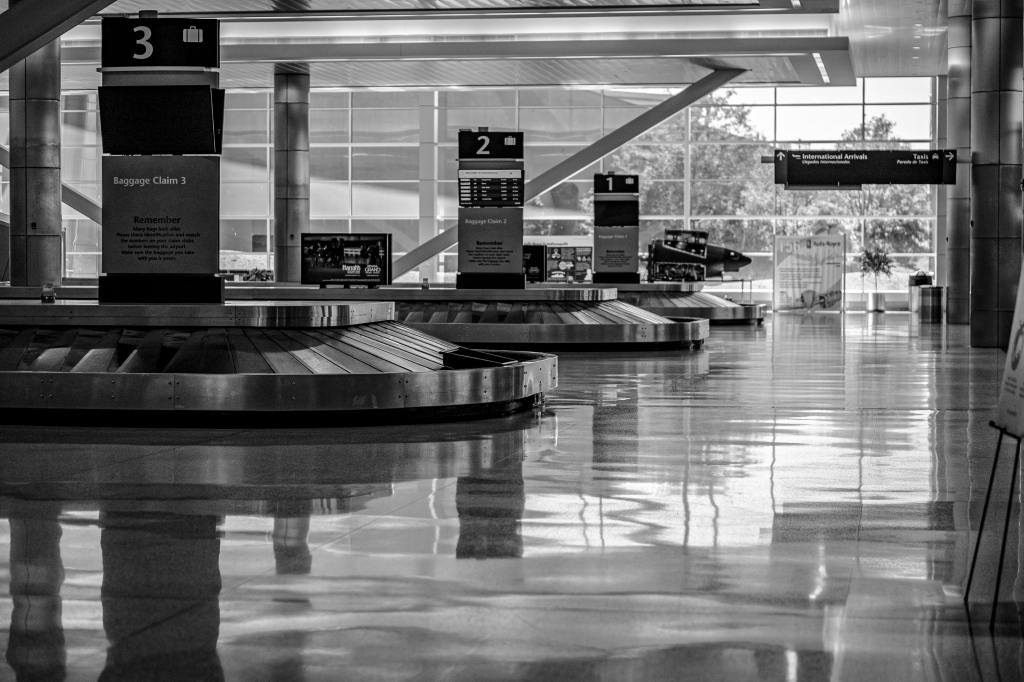
But I’ll try to keep focussing on getting to the Baggage Reclaim that is Easter Sunday. Then I shall pick up a bright, shiny new suitcase.

As I unpack it, I know I’ll discover that Jesus will have put wonderful surprises in all of those tiny, oddly shaped spaces which I overlook frequently.

I hope that your journey through Holy Week will be challenging, yet exciting and fruitful and who knows, when we pick up our new baggage on Easter Sunday, perhaps inside it, as well as those things which Jesus wants us to take forwards, we’ll find a chocolate egg or two!

Journey well.

Please Take a Seat

Image by Jonas Jacobsson @ Unsplash.com

Last week I went to a study day on Ignatian Spirituality at Penhurst Retreat Centre in East Sussex. This was my first visit but certainly won’t be my last.

Just stepping across the threshold of this beautiful 17th century Jacobean manor house was so calming. There was a wonderful sense of peace and, despite the misty, damp weather, it was a joy to walk around the grounds, write and pray in one of the small cabins in the orchard, walk the labyrinth and visit the 14th century church during the regular breaks we had throughout the day.

Our study sessions were held in the chapel room with the chairs arranged in a semi-circle. When I went in at the start of the first session, I simply took the nearest free chair.

As we left the room for our first break, we were told that we could leave things we didn’t need to take with us in the room. This meant that when I returned, I went and sat on the same chair as for the previous session, because I’d left a bag next to it. I did the same thing automatically after our second break.

As we reconvened after lunch, someone pointed out that everyone had gone back to the chairs they’d be sitting in during the morning sessions. We all had a wry smile, as we realised that this was true.

When we came back for our final session, some people went to sit in a different position quite deliberately. This caused some initial confusion when others came in and found that they’d have to make a decision on where to sit rather than taking the easy, and by now familiar, option of going back to the chair they’d sat on before.

I still went to sit on the same chair. Partly because it saved me having to root around under it and move my bag to somewhere else and partly because I’m naturally rather lazy!

It just seemed easier not to have to make a decision about where to move to, especially as there didn’t seem to be anything wrong with where I’d been sitting. Plus, if I’d moved, I would only have been fulfilling other peoples’ expectations that at least some of the group would find another seat.

That was a small group situation and only involved selecting one seat from a choice of nine. How much more difficult that decision can be when faced with a larger selection. Have you ever noticed how in a room filled with rows of chairs, the front row is almost always left empty? Why don’t we like sitting in that row?

It’s a good space to be in if you have any degree of hearing loss and need to be near the speaker in order to hear what they’re saying. And, if you ask a question, you’re not facing, and therefore being stared at, by the rest of the audience, which you are if you’re in the middle and the people in front of you turn round to look at you when you’re speaking.

It’s probably because we feel that we might be more likely to be called upon to comment on or answer something when we’re at the front. After all, the speaker can see the faces of people in the front row more clearly than those of people further back in the group or audience.

That can be a scary prospect: Will we have heard the question correctly? Will we have understood the question? What will people think of our answer? We’d often prefer to sit towards the back where we feel we’ll be less likely to be noticed or have attention drawn towards us.

However, when chairs are arranged in a semi-circle or circle, any chair can place the person sitting on it ‘front and centre’ of the group, depending on where the speaker is. We can feel very exposed.

I felt very safe sitting in the circle last week. The atmosphere was very calm and Spirit filled. It was a wonderful illustration of the fact that, in God’s seating plan, everyone is valued, wherever they choose to sit and whoever they choose to sit next to or between. God is just happy that we’ve chosen to sit with him and we’re always very welcome.

Sitting at the front of a block of seats sometimes isn’t something to be frightened of but nor does it confer any special status. Sitting closer to the back demands just as much from us: we can’t and shouldn’t try to hide.

We need to be welcoming to other people coming to take a seat: not just taking our usual place but perhaps moving to an unfamiliar position in order to come alongside someone less sure of their place.

The amazing thing is that wherever we sit and whoever we sit next to and however prominent or overlooked we may feel, we’ll be exactly in the place God wants us to be in at that time.

His ‘Please take a seat’ is really a ‘Please take the seat I’ve prepared for you. Don’t worry if you feel a bit uncomfortable there: I’m right here beside you’.

What a comforting thought. He’s there whether we’re sitting in rows or in a circle, on a blue chair, a green chair or a red one; even if we’re on the one with the rather fragile leg!

Well, so we’re all sitting comfortably …… now let’s hear what He wants to say to us.

Weaving the Threads Together

Recently I visited the Tate Modern gallery in London to see an exhibition about Cézanne.

One of the most impressive features of Tate Modern, a decommissioned power station on the bank of the river Thames, is its 27m tall Turbine Hall in which some unusual and striking works are displayed.

When I visited, two large hangings by Cecilia Vicuña filled the space as part of a multimedia installation Brain Forest Quipu.

While photos can’t do justice to its scale or complexity, you can see it by copying and pasting this link: tate.org.uk/whats-on/tate-modern/Cecilia-vicuña/material-experiments

It was possible to walk close to and even through the hangings but I found that the better view was from the balcony which bisects the Turbine Hall, where I was able to read more about this work.

I discovered that the quipu is an ancient South American way of recording anything from messages to memories and of communicating using knotted threads. The hangings were white to represent bleached out trees, probably offering a ghostly comment on the destruction of the rain forests.

Woven onto the knotted threads or ropes were lengths of fabric, pieces of cardboard, plant fibres and unspun wool. Whilst drinking a coffee earlier, I’d watched people on the river bank scouring the mud and some items recovered from that bank by South American women had also been included in the quipu.

Each of the hangings had a different, accompanying soundtrack made up of voices (including Cecilia Vicuña’s), sounds of nature and deliberate periods of silence.

There was so much to think about whilst experiencing the quipu; I found it fascinating and over the weeks since then I’ve been thinking about how I’d choose things to include if I was asked to construct a quipu to communicate my own life story and experiences?     

What would I hang on the ropes? What fresh new things and what torn and broken remnants and scraps, perhaps some of them almost bleached of their meaning, would I use to represent my life to date? What would I be happy to have on display and what might I prefer to keep away from public gaze?

Like everyone, I experience my human life through so many different textures, layers and contexts, both physical and spiritual. How can I possibly fit all the different elements together and for what purpose? Who could put the pieces together for me? Who sees the whole picture and can share that with me?

The quipu at Tate Modern must be very heavy: the two hangings are so large but they’re fastened firmly to the ceiling so there’s no danger of them falling before the end of their time on display.

I’m experiencing a growing sense of being anchored in Jesus who knows all the bits of my life: those bits I don’t mind displaying and those bits I’d rather keep to myself.

Some of the ‘ropes’ on my quipu are already full, some are full of things which could or should be discarded and there are so many knots, while some are still fresh, almost new and waiting to have things woven onto them.

However complicated that process may become, I know I’ll be safely held as Jesus continues to weave His plans into my life. I wonder what soundtrack He’ll use to accompany this construction?

I’m pretty sure that I’ll never have anything on display at Tate Modern but the fabric of my life is being changed in a way that’s far more precious than any valuable piece of art.

How is Jesus weaving the structure of your life? What things are you offering Him? What might your soundtrack be?

Who’s in Control?

Image by Luca Bravo at Unsplash.com

At some point this year and possibly sooner rather than later, I’m going to need to get a new laptop computer, my current one is at least eight years old and now runs very slowly.

I’m dreading having to make the change in case any important files, especially files of photos, go missing while they’re being transferred from one machine to another.

Fortunately, I’ve got a computer expert, Grahame, who will do the transfer for me. He’ll come and collect both the old and new laptops, do the work at his house and then return them; the new one primed and ready for action.

From time to time when I’ve had a problem with my current laptop (usually because my impatience when trawling a website means I’ve ‘agreed’ to accept cookies), Grahame steps in to help. By the time I contact him I’ve usually got a whole jar full of cookies but he helps me by doing a remote fix.

I agree a time to phone him and then, by using a piece of software he’s installed on my desktop, he can take control remotely and work through various things until the problem is fixed …. at least until the next time.  

While I marvel at the ease with which he does this and the fact that he can hold a conversation at the same time, it’s very disconcerting to watch the cursor whizzing round my screen, opening, closing and deleting documents and programs without me touching the keyboard or the mouse, even though I’m itching to do so.

It’s really hard for me to relinquish control, to sit back and watch changes, repairs and improvements taking place. Of course, they’re going to be very beneficial ultimately but it’s still a scary process sometimes.  Nobody likes to give up control, do they?

Some of the words and phrases that come to mind when I think about Grahame taking control of my laptop are: ‘awe inspiring’, ‘fascinating’, ‘I know I can trust him’, ‘I’m so grateful for what he’s doing’, He’s so patient’, ‘I feel a bit scared but I know that the changes he’s making are for my own good’.

You probably don’t know Grahame but does that list remind you of anyone you do know? When I was writing it, I was struck by the fact that I could use all of those words and phrases to describe my relationship with Jesus.

He is working in me to make me into the person he wants and needs me to be: removing the things I don’t need and tidying up and strengthening the things I do need to keep.

We sometimes have our battles about who should be in control but He is endlessly patient and I’m gradually becoming more confident at sitting back and just watching things unfold. The process is fascinating and awe inspiring.

I’m almost excited about buying another laptop now. What new opportunities will come with it? What new blog posts will I be inspired to produce? Where will Jesus reveal Himself in my everyday life in the days and months to come? What will He write into my life and what does He want to write into other lives through my blog?

I don’t have the answer to those questions yet but I know someone who does have them ….

Navigating the Icebergs

Image by Job Savelsberg at Unsplash.com

One of the books I received for Christmas was a biography of Sir Ernest Shackleton, the polar explorer. The particular edition, simply called Shackleton and written by Roland Huntford* had long been on my reading list following good reviews I’d read.

I also feel a ‘personal’ connection with Shackleton, as Charles Green, who was the cook on what was the third and best-known of Shackleton’s expeditions, visited my primary school when I was about ten years old and showed us slides of that trip. After his talk he signed my autograph book, which I still have.

Though I was expecting to find the book interesting, I’ve been completely gripped and would thoroughly recommend it.

I’m writing this blog post on 9th January which was the date in 1909 when Shackleton, on his second expedition and while trying to reach the South Pole, reached the furthest point south ever travelled in the Antarctic region at that time, beating the man who was the leader of his first expedition but, by then, his arch rival, Scott by 360 miles.

The details of that trip aren’t for the faint hearted. Using minimal equipment, with almost no knowledge of how to use their rudimentary skis, mostly walking for over 120 days despite having rations for only 91 of them and suffering the effects of malnutrition and the disappointment of having to turn back before the Pole, Shackleton brought everyone involved home safely.

Yet the difficulties of that expedition were as nothing when compared with his next adventure. As the South Pole had been reached by Amundsen in 1911, in 1914 Shackleton attempted a journey across the Antarctic via the Pole. However, his ship Endurance became stuck in pack ice and drifted for over 1100 miles before being crushed and abandoned nine months later and subsequently sinking.

After almost six months living on ice floes, Shackleton, with five crewmen, sailed one of Endurance’s three lifeboats over 1300 km to try and reach the whaling stations on South Georgia and mount a rescue operation. Again, he was successful despite almost unbearable odds.

Shackleton (the book) draws heavily on the diaries of each expedition kept by Shackleton and other team members. Those of the crew members constantly make reference to two inspiring aspects of Shackleton’s personality. Firstly, his instinctive understanding of what he needed to do – and when – in order to keep morale high and people working together.

Secondly, his willingness to sacrifice his own comfort. He never presumed on his seniority as expedition leader and often gave up some of his clothing and food when he felt others had a greater need.

I know that I won’t ever be drawn to go on an expedition, or even a holiday, to the Antarctic. I feel the cold and I enjoy the comforts of my home too much!

But I do find myself sliding around sometimes, struggling to grip onto aspects of my life, deciding which will be the safest path to take. Although I’m never in as much danger as I would be if I were on an iceberg, even my relatively conventional life can get pretty unsettling.

Apparently, Shackleton was not especially religious, yet in his own book about the expedition** he noted:

“When I look back at those days, I have no doubt that Providence guided us, not only across those snowfields, but across the storm-strewn sea that separated Elephant Island from our landing place on South Georgia. I know that during that long and racking march of 36 hours over the unnamed mountains and glaciers of South Georgia, it seemed to me often that we were four, not three. I said nothing to my companions on the point, but afterwards Worsley said to me, “Boss, I had a curious feeling on the march that there was another person with us.” Crean confessed to the same idea.”

Unlike Shackleton I don’t have to sail miles across treacherous seas to find my help and, unlike him, I name Jesus as my companion on my life’s journey; the one who always knows when I need a morale boost or some encouragement and who wouldn’t sacrifice just food or clothes for me but sacrificed even His life for me.

Exactly 114 years to the day after Shackleton turned away, reluctantly, from his goal of reaching the South Pole, I’m finding his story very inspiring. We all need people to inspire us, don’t we? His story has fascinated me since the age of ten and I’ve been glad of the opportunity to read about it now.

There are less and less places on the globe which remain undiscovered yet we can all set out on journeys and voyages of discovery, both in literal and faith terms, as 2023 gathers pace.

I hope you won’t hit too many icebergs along your journey but feel Jesus with you, keep pushing forward even when you can’t see, or even imagine, where you’re going.

And now…. I’m off for a nice warming cup of tea!

* “Shackleton” by Roland Huntford pub. Hodder & Stoughton Ltd (1985) and Abacus (1996) ISBN 978-0-3491-0744-** “South : The Endurance Expedition” pub. Penguin Modern Classics (2004) ISBN: 9780241251096 Original Pub. William Heinemann, London, 1919. (Many editions now available.)


Turning the Page

Picture by Noemi Jiminez at Unsplash

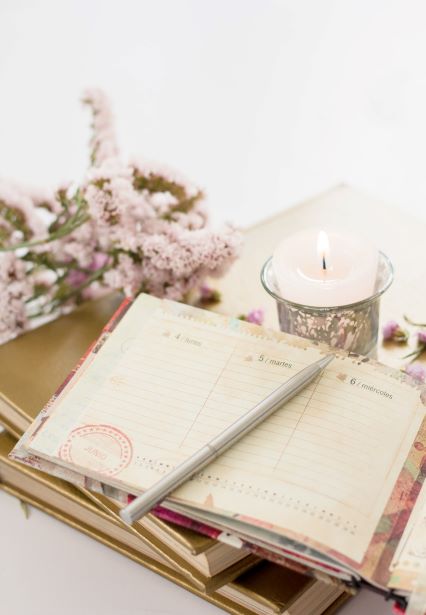
For several years now, during the last week of the year, I’ve found myself looking back through my diary and listing all the enjoyable, non-routine things I’ve done. No appointments with my chiropracter or dentist, for example, make it onto the list.

The things which do make it are those things which have given me pleasure. The completed list brings back so many lovely memories of holidays, days out and time spent with friends. It’s so good to recall and remember the special times which the year has produced.

Sometimes at this end-of-year time with its shorter days and always battling my ‘glass half empty’ personality, I’m really surprised and cheered by the number of lovely experiences I’ve had.

This year, 2022, particularly in its final quarter, has been a difficult one. Just after my last blog post was written in mid-September, my mother was admitted to hospital where, unfortunately, she died in late October. So, for much of the last months of the year I had little time for anything outside the most routine daily tasks. Therefore, I was expecting to be using a much smaller piece of paper to list my highlights.

However, once I’d started, I was very pleasantly surprised at all the lovely, positive things which have happened: short breaks with good friends, trips to London for that quintessentially English treat of afternoon tea, visits to museums and galleries and, by far, the most important, the time I was able to spend with mum in the care home before she went into hospital.

Although not without their stresses for both of us, these visits, together with the rare trips out we were able to take, gave her much pleasure and me some important memories.

Looking back through 2022 I can also see the steps I’ve taken in my faith journey: some faltering, others more clearly defined and I give thanks for the people who’ve encouraged and supported me along the way in person, through prayer and by writing the books which have inspired me.

I wonder whether Jesus, in the years before he began his ministry, looked back and reviewed each year as it passed? What happy times spent with family would He recall? What friendships? What family responsibilities? What, in His human existence, were the waymarks along His spiritual path? Was He happy? Frustrated? Perhaps even regretful sometimes? As He drew closer to the time when His ministry began, how might He review the previous years as He began to let go of His simple family life in order to carry out His real purpose?

I enjoy my review of each year and I keep all the lists of highlights. They’re useful to flip through if I’m having a day or two of depression and I can give thanks for all the good things which I’ve experienced and shared with Jesus who has been alongside me throughout.

2022 has been a hugely difficult year for so many people and communities across the world and 2023 looks to be equally challenging.

Writing this blog helps me to reflect on the spiritual aspects of every day life and situations and I pray for the inspiration to continue doing so as I turn the page into a new year. Thank you for reading and a very Happy New Year.

A Day of Change and Constancy

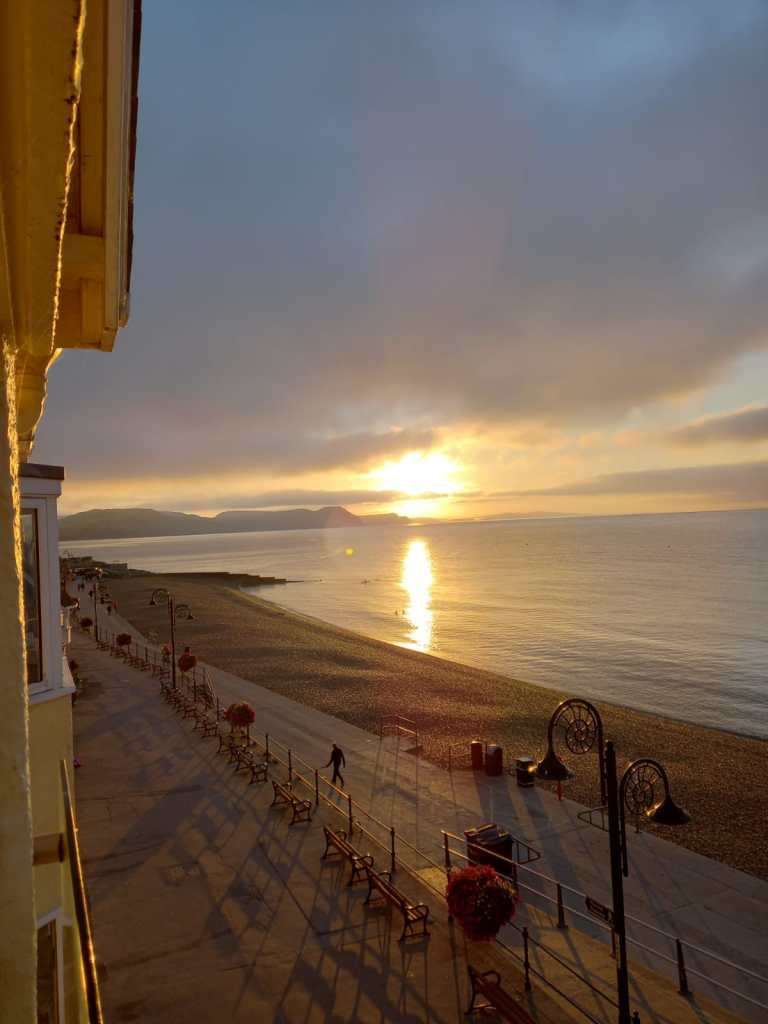
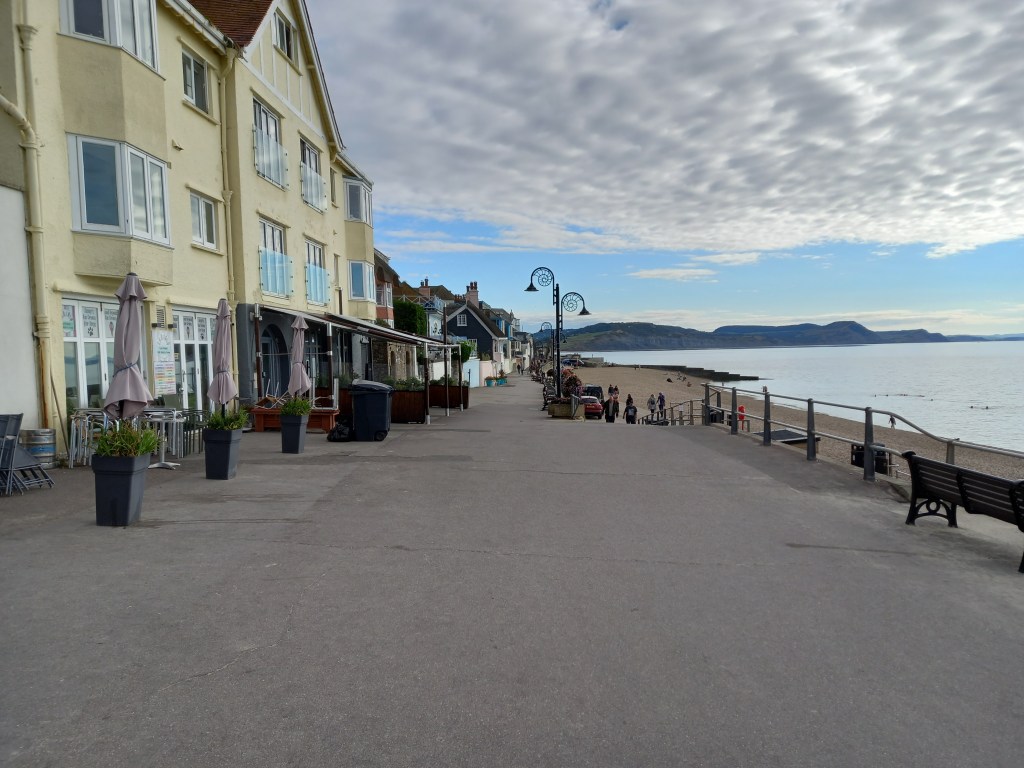
Far from the crowded pavements of London, I woke to watch the sun rising over the ancient cliffs and timeless shores round Lyme Bay in Dorset.

Walking along the promenade at Lyme Regis, usually so noisy with the scrape of cafe tables and chairs being set out for the day’s customers, the silence was profound. The deep silence I normally associate with waking on Christmas Day marks out today as something special.

The Unusually Quiet Promenade

The cafes are closed and the promenade and beach are quiet. Not quite deserted: one group of people have taken over a beachside table. Its white cloth topped with union flags, they enjoy a patriotic English breakfast cooked on a portable grill.

The local swimming club enjoy their daily meet; earlier today, perhaps, before returning home to watch the only Queen they’ve ever known being laid to rest. Dogs are still being walked, as dogs must be, however great the national pageantry about to unfold.

In the harbour, fishing boats bob gently on the high tide, shifting thoughtfully on this unusual day, freed from their usual risky voyages.

And, all the time, the gentle susurration of the waves ebbing from the shore. Later, the tide will turn and come in again, then go out again and so it will continue, as we so fervently hope our monarchy will.

I’m privileged to be in this beautiful place on this special day. Yesterday evening I joined locals and other holidaymakers in a candlelit act of remembrance on the seafront. Pillar candles surrounded a picture of our late Queen Elizabeth as everyone lit a tealight before we joined in the national two minute silence. As we stood, heads bowed, the silence was broken only by the continuous lapping of the waves on the shore. A powerful reminder that some things are unchangeable and that, even after the most violent of storms, some things just continue without our intervention.

Watching the television coverage of Her Majesty’s funeral, because of my poor hearing, I sometimes struggled to hear the words of the service yet I heard the ebb and flow of the waves coming through the open door of our seafront holiday apartment throughout.

Though the crowds of day visitors were smaller today, there were many families on the beach throughout the funeral. I wonder how many of the children were building sandcastles, castles in remembrance of the Queen?

When the two minute silence was held I glanced out of the window and it seemed as though a number of adults in the sea, paddling with children, stood still for a short time. Perhaps it was coincidence or perhaps they were following the service on a phone but it was a fleeting, yet powerful image.

By mid afternoon, there were many more people walking along the promenade, keen as I was, to get some fresh sea air after hours watching television coverage.

By late afternoon, with the television coverage finished and the sky increasingly overcast, I walked along the promenade again. The day visitors were packing up to leave the beach and head home, dogs were still being walked and an air of calm hung over the town as the tide began its next return to shore.

Tomorrow the cafes and shops will be open again, work or holidays will be resumed and the tide will still flow in again and out again. A reign has ended and another begun and yet we have continuity.

In years to come, I’ll remember staying at this place – which is so special to me – when Queen Elizabeth’s funeral was held and, in particular, the soothing and supremely reassuring music of the sea which accompanied this historic day.

Finding the Perfect Space

I’ve always enjoyed driving, despite the ever-growing volume of traffic on the roads (highways.) Sometimes, I even find it relaxing.

On regular journeys, I have landmarks I look out for as a way of making the journey pass more quickly: simple things such as a particularly attractive building, a strangely shaped tree or a favourite quickly glimpsed view.

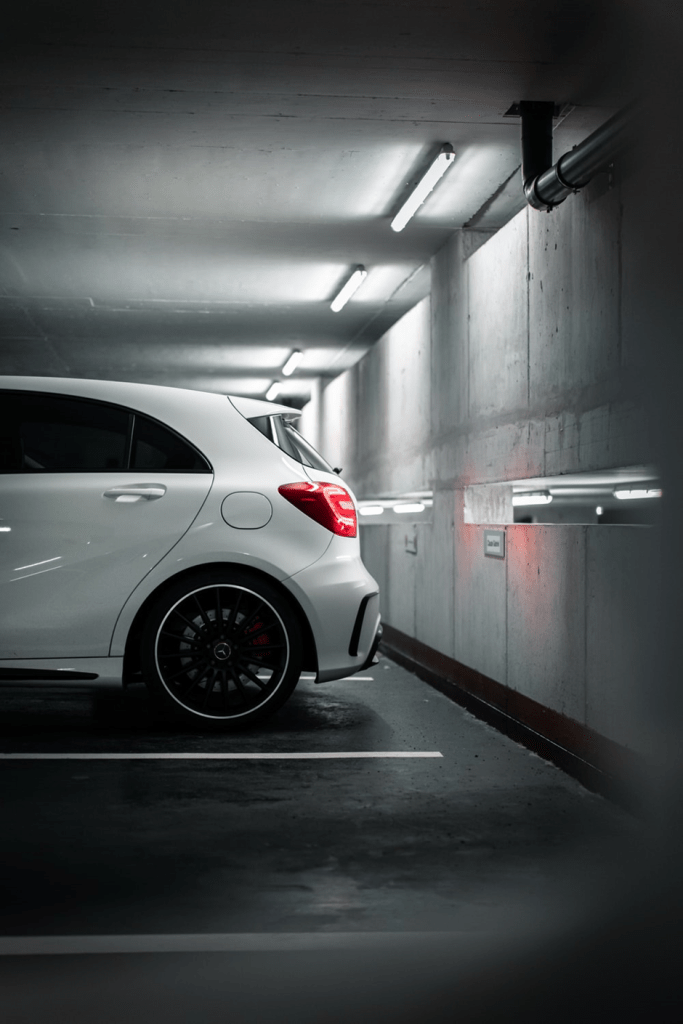
However, the bit of any journey that I dread is when I arrive somewhere and need to park my car. I dislike the tight turns in multistorey car parks (parking garages) and the way that the size of spaces hasn’t kept pace with the way cars have got larger over time.

I can, very occasionally, drive straight into a space and position myself centrally at the first attempt but if I decide to reverse into a space, I simply don’t have the coordination to turn the steering wheel the correct way to manoeuvre the car backwards, while, at the same time, checking my mirror.

When I collected my current car from the dealers, the salesman was very keen to show me how to use its self-park feature to reverse park into a space parallel to a kerb. This involved stopping beside the vehicle in front of the chosen space, selecting P then taking my hands off the steering wheel completely and letting the car reverse itself into the space.

I found this so disconcerting when I tried it with the salesman beside me and on the dealer’s forecourt, that I’ve never attempted it again since that day five years ago!

There’s so much to consider when parking. Am I in the centre of the space between the (often faded) painted lines or am I at a crazy angle which stops the driver or passengers from getting to the vehicle in the adjacent space? Will I be able to open my door to get out without scraping the paintwork of the neighbouring car? Will I actually be able to get out of the driver’s door or will I need to manoeuvre myself out like an unwieldy octopus, via the passenger’s door?

I’m on a journey in my Christian life. It’s full of twists and turns, adventures and challenges as I try to find that one space in God’s kingdom that’s been prepared specifically for me.

I sometimes feel as though I’m driving endlessly round a car park searching. Which space is the most accessible? Is the ‘easiest to get into’ space necessarily the one I should choose? Am I (or more specifically my ego!) too big to fit into the space? Or do I see myself as too small to warrant taking up a space?

It sometimes feels as though I cannot even reach the spaces. I know they’re on the levels above – and below – where I am but I somehow keep following the routes which lead to dead ends.

When I think I’ve found a space which I feel I might fit into, can I really trust my sensors as I park myself there? They’re telling me I’m safe but it can seem as though I’m getting closer and closer to an obstacle which could damage me.

I need to have faith that I’ll be brought into just the right space at the right time. The perfect space. A place of total safety. It’s even safe (though still scary!) to take my hands off the steering wheel and allow God to take over the steering. In fact, that’s the very safest way to park.

While others round me screech round the tight turns, move forwards, reverse, move forwards again, occasionally abandon spaces or scrape the walls or block the paths of others, I can simply glide into that one place where God wants me to be at this time in my journey with Him.

I know that I need to move on to emptying the boot (trunk) of the car and sorting out all those things which I carry with me and which can weigh me down. But for today, I’ll simply sit quietly where I am and give thanks for this space and this journey.

A Box of Delights

Image by Monique Carrati at Unsplash

Who likes eating chocolate? Most of us, probably, if we’re honest.

My love affair with chocolate started with the simple ‘one finger of chocolate’ bar that I was allowed after lunch in early childhood. Since then, I’ve always enjoyed tearing open the wrapper and the shiny foil inside and sinking my teeth into that delicious, melting softness.

A few years ago, when I took an exam at the end of an Open University course, I couldn’t believe that I was allowed to take some chocolate in with me. (At school and college, we weren’t allowed to take any food or drink into the exam hall.) I bought the largest sized bar of my favourite fruit and nut chocolate and started unwrapping it before the exam started ready to take full advantage of this situation.

Unfortunately, I realised immediately that the rustling and tearing of the foil was going to be too distracting for everyone near me: the quieter I tried to be, the louder it sounded. I went through the three hours with the chocolate so tantalisingly close yet so unobtainable. When the exam finished, the man sitting in front of me turned round and said, “What did you think of that?” to which I replied, “Would you like some chocolate? Take as much as you like”, now desperate to get rid of the sticky, melting block.

I have an even more fraught relationship with boxes of chocolates. Recently my husband, Paul, arrived home from playing in a bowls tournament with not one but two boxes: his share of his team’s prize for winning the competition.

While I was pleased that he and the team had been successful against the odds (being one team member short), I wasn’t as overjoyed with the prizes as he was probably expecting.

Although I enjoy bars of chocolate, I struggle when someone offers me an open box of chocolates and I’m given the chance to choose one. Why? Because, looking at all those squares and rounds, sometimes in individual fluted paper cups, some with decorative chocolate icing on top, I can never decide which one to take.

Looking at the card or leaflet which shows the flavour of each doesn’t help; it only makes things more difficult. It’s not that I’m indecisive, rather I’m afraid that I’ll be swayed by the appearance, or even the name, into making a choice which will prove disappointing.

How often in everyday life we have to make a decision or decisions based on selecting from a range of options. So many of these can seem attractive but prove to be disappointing, even dangerous, once selected.

If I see my spiritual life as a box of chocolates, full of options, some immediately tempting (the gooey, melting soft centres) and some more challenging (those dreaded hard centres) which ones do I pick and which do I avoid? Which ones should I pick and which should I avoid?

It’s so much easier to go to a joyous Easter Day celebration service or the packed candle lit carol service, with its cosy familiarity and friendly faces, than work through an Examen or Lament prayer practice alone.

Yet, each is important. The variety of the chocolate box is one of its strengths. There is something for everyone and it’s the same with our Christian lives too. What appeals to one person won’t appeal to another. We have our own strengths and weaknesses and together we make up a perfect selection. We all have the same coating through the Spirit and we’re all equally attractive and desirable to God.

Perhaps, from time to time, we need to step back and look outside those things we are naturally drawn to – our first choices – and try something different. Let’s be willing to be nudged towards things outside our comfort zone. Sometimes we may damage a tooth on an unexpectedly hard centre but we may also develop a deep love for something we didn’t expect to find to our taste.

And, as an extra incentive, there’s no calorie counting required! There’s no limit to the amount of treats we can take from God’s box. He delights in us taking as much as we can of Him.

Pass the chocolates ….. Oh, and mine’s the coffee cream!

Don’t Lose Your Place

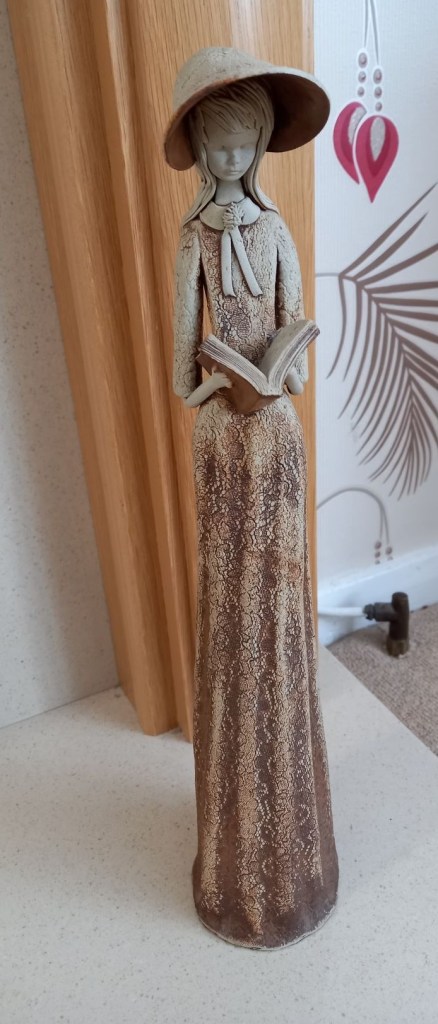
My Favourite Ornament

I love reading and have done ever since I was first able to turn those strange shapes on the page into the gateways to new and absorbing worlds inhabited by fascinating people.

At any period, I’m usually reading two books: one chosen by majority vote of the book club I belong to and the second being my own choice.

As well as what’s written in the books: wonderful worlds to explore and characters to meet – some of whom will become life-long friends – I love the physicality of the books. The smells they release of newly inked pages and the first crisp crack in the spine of a paperback (soft cover) never fail to delight me.

But, wonderful as pristine new books are, I really prefer second-hand (used) books. As well as carrying one of my favourite scents: musty yet deeply intriguing and some of my favourite stories, they carry so many unknown histories. Histories of the bookshelves and tables they’ve rested on and, most importantly, histories of the lives of their previous readers.

We sometimes get tantalising clues from a dedication written inside the cover. What is Vincent who was given this book from his Junior Church in 1972 doing now, I wonder.

Did Susan appreciate this Christmas gift from Auntie Mary and Uncle Don in 1980 or would she have preferred to have been given a book token and allowed to make her own choice of story?

Even more intriguing than these dedications are the things people have chosen to use as bookmarks. Where did the person wear the dress, the receipt for which marked their place in this second-hand murder mystery?

Why was the person who marked their place with a train ticket travelling between those particular stations on that day? To a wedding or funeral? To a job interview? For a hospital appointment? To visit family? To go on their first date? Were they frustrated that the train pulled into its destination at a key point in the story? I do wish I knew the answers.

Bookmarks, whatever form they take, are one specific kind of place marker. We have a need to physically mark the beginnings, middles and endings of our own chapters. What do we use to keep our place between the pages of our lives?

Sometimes we use specific ceremonies such as weddings, graduations or milestone birthday celebrations. But for much of the time our days follow one another with little variation and we can be so overwhelmed with busyness for a period that we lose our place completely.

It can be difficult then to remember or to recognise exactly where we are and we waste time skimming through the pages of our life, trying to get back to where we think we were, or are, or indeed think we should be, so that we can pick up the story again.

Yet in Jesus I’ve found the perfect bookmarker. He knows exactly where I’m up to in my life’s story: both how far I’ve come and how far I’ve yet to go. I can always find Him, however dog-eared the pages I have to search through. He’ll show me where I am and, if I’ll let him, gently guide me through the next chapters.

He’s my constant companion among the memory markers: rejoicing with me during the happy chapters; sharing my sorrows during the sadder ones; renewing our friendship, which unlike that in a physical book, will last far beyond the final chapter; always ready to blow the dust from the pages I feel are soiled and to add a clean page when I need one.

Most importantly, He can never be lost as so many paper bookmarks are. May he be your marker of choice in the story of YOUR life.

Current favourite reading: Sensible Shoes A Story about the Spiritual Journey by Sharon Garlough Brown. pub: InterVarsity Press (2013) ISBN 978-0-8308-4305-3

Peeling Back the Layers

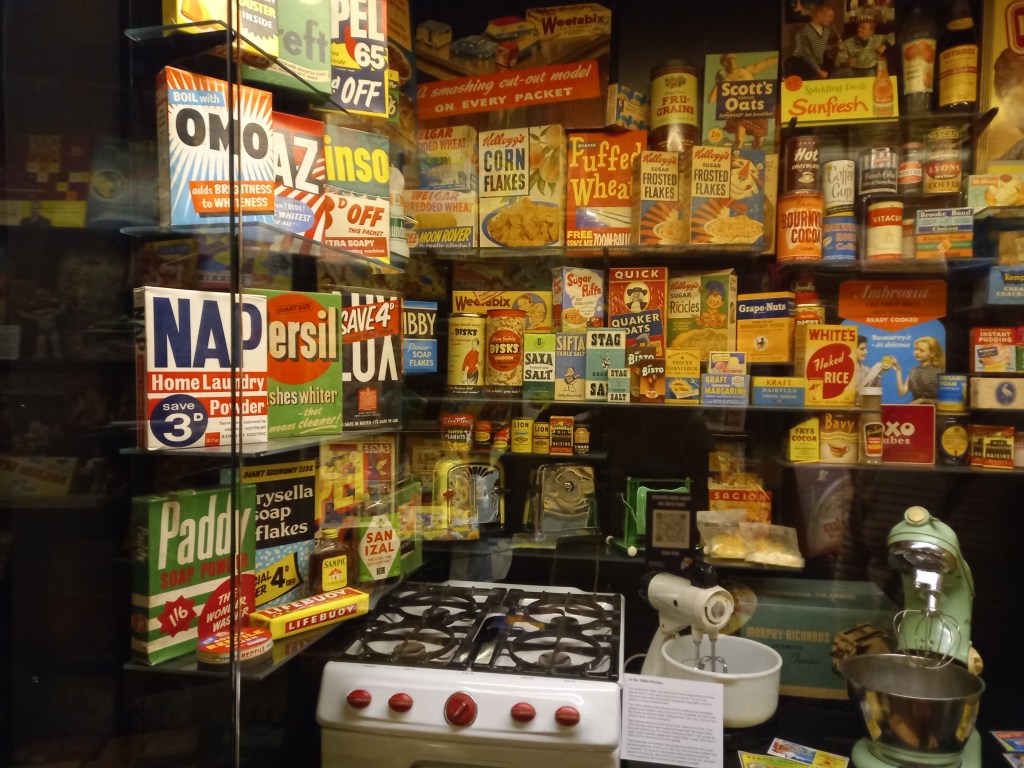
A few weeks I visited the Museum of Brands in London’s Notting Hill Gate area. It was fascinating to look at the many packets and tins spanning the decades from Victorian times to the present. (There are also fashions, household appliances and toys to see; it’s a great, nostalgia fest if you’re in London.)

Almost every packaged item I saw was either a cardboard box with a simple tuck-in top, a metal tin with a lift off lid or a can for which a can opener would have been needed. Although the old style can openers with sharp ‘teeth’ which were operated using a sawing motion could sometimes be dangerous, they were easy to use and generally effective.

This got me thinking and asking myself why practically everything we buy now is such a challenge to open?

Recently I was faced with a plastic envelope printed with a clear line across its flap, along which I was instructed to “tear here”, only to find the plastic stretching and stretching but still denying me access to the contents. How I was supposed to return the item in this same envelope if I’d decided not to keep it is a mystery, very little of the envelope being intact once I’d finally opened it.

Cans with a ring-pull opening might look easy to open. However, I generally find that the lid only pulls back to halfway across the can, meaning that the contents have to be dug out with a fork or the lid bent into the can then out again several times before it finally lifts away, shooting liquid in my face if I’m not very careful.

Then there are the vacuum packs. I’ve lost count of the times that opening a vacuum-packed filling for a ‘quick’ lunch has led to a broken fingernail or a cut finger as I’ve resorted to scissors or a knife in my attempt to prise apart the thick plastic layers at the corner of the pack so clearly marked “peel here”.

Opening vacuum-packed fish is a particular bugbear, as frustration sometimes leads me to apply a burst of almost super human strength, resulting in the pack finally opening and covering me in fishy smelling liquid.

My worst packaging nightmare though, has to be the very thick, hard-edged plastic cases around new electric toothbrushes. While I understand that they need to be packed hygienically, I’d almost rather pull out all my teeth than face having to try and open any more of these brushes.

If I find it hard to release these foods and household items from their secure packaging, how much more difficult do I sometimes find it to release the real me from the protective layers I sometimes feel I need to build up, especially when depression heightens my vulnerability. 

When I’m at my lowest, I feel trapped inside thick, impenetrable layers, unable to move or to shift to get just slightly more comfortable.

Times like that are when I really have to search for the Sunlight Through the Shadows. For the messages and prayer support from concerned friends and the sense that, however deeply I feel I need to bury myself, God still sees me, loves and values me and will help me, in time, to break out from the place I’ve been trapped in, to emerge with renewed energy and commitment.

Some of those packets and cans in the museum are now empty but others remain unopened; their contents never seen or likely to be seen, hidden and unused though possibly still intact.

As a result of recent Quiet Days I’ve attended, I’ve begun to understand and to claim my ‘belovedness’ as the core of my personality. Being opened and opening up (that peeling back of the tightest layers) takes time, especially when trying to avoid the jagged edges of the packaging but it’s also a beautiful and exciting process.

I give thanks that there is still so much more to come, so much more I can show and achieve. I’m definitely not going to be left on a shelf!

Do you remember any of these?

Welcome to Sunlight Through the Shadows

Go back

Your message has been sent

Warning
Warning
Warning
Warning

Warning!

Always fascinated as a child by church buildings and what might be inside them, though I didn’t go to church then, at different times I’ve been part of a Baptist church (in my teens), an Anglican church in town and two rural parishes.

In my current parish, I’m on the Parochial Church Council and head up a small Generosity and Giving Team. I’m also passionate about helping to raise the profile of our three parish churches within their communities.

Like many people I found the various Lockdowns on 2020 and 2021 very difficult and they cast quite a few shadows over my life and mental health.

However, the strong bonds forged through a small group of female Christians in the parish, meeting first on Zoom for an Advent group,* then two Lent groups** and then forming a Creative Writing Group, have truly brought the sunshine streaming through the shadows as we’ve begun to develop our writing and continue to support each other prayerfully as we follow our individual faith journeys and grow as Christians.

I’m retired following a very varied working life including secretarial work, working as a teaching assistant in a primary school, as a tutor helping adults improve their literacy skills, writing and delivering volunteer training, working for a charity for the Deaf, freelance editing and proofreading and providing domestic help care for mainly older clients.

Much of my time now is spent working on developing Generous Giving ideas for my parish and giving as much emotional and practical support as I can to my mother who is in a care home.

In my free time, I like to read, garden and write. I belong to both the church-centred and a non-Church centred Creative Writing Group and enjoy writing short stories, memoir and poetry, usually on one of the chosen themes for each of these groups’ meetings.

*following “At Home in Advent” by Gordon Giles, pub. Bible Reading Fellowship 2020

**following “At Home in Lent” by Gordon Giles, pub. Bible Reading Fellowship 2018 and “Sharing the Easter Story” by Sally Welch, pub. Bible Reading Fellowship 2021

Days at the Beach

Today is a ‘beach’ day. I’m not actually on a beach, though it’s certainly beach weather: a lovely early summer’s day with blue sky, light cloud and the warmth of the sun.

Photo by Sean Oulashin on Unsplash

It’s Monday and by 10.30 a.m. I’d been able to achieve things from both today’s and tomorrow’s To Do lists. I’d done the fortnightly food shop, had my car cleaned while I shopped and filled it with fuel.

However, as I drove home basking in what had been completed, an all too familiar wave of depression raced up my happy beach, spoiling the view and threatening to overwhelm me.

Then, closer to home, I unexpectedly found a car space near the station, which meant I could buy my train ticket for an eagerly anticipated day trip to London later this week. The waves dropped back a bit and I could start to see the pleasant view again.

Just as I returned to my car, I realised that I’d parked outside the eye care centre where I planned to collect some new reading glasses tomorrow. I was able to collect and use them a day earlier than expected! Even without the help of my new glasses, I could see the waves retreating further; almost out of sight.

My beach was now golden, warm sand on which I could relax; two days’ worth of domestic tasks having been completed so easily. The sound of the distant waves was no longer the threatening sound of an approaching storm but the gentle susurration of water pulling stones gently into itself then carefully carrying them and leaving them in another place.

Unfortunately, I know that, following the pattern of recent weeks, another wave of depression may swamp me at any time, with no obvious trigger. But the image of the beach is helpful.

Just as one tide can bring storms, another will bring calmer times when I can just relax and enjoy the rest and the beauty of where I am and who I am: a beloved daughter of God.

This beautiful song Rest in My Love by Marilyn Baker is one of my favourites, both for the sunny beach days and the days when I’m huddled under an umbrella with the wind blowing sand in my face. Enjoy! https://www.youtube.com/watch?v=6b7EY3_YwRU

Holey, Wholly, Holy

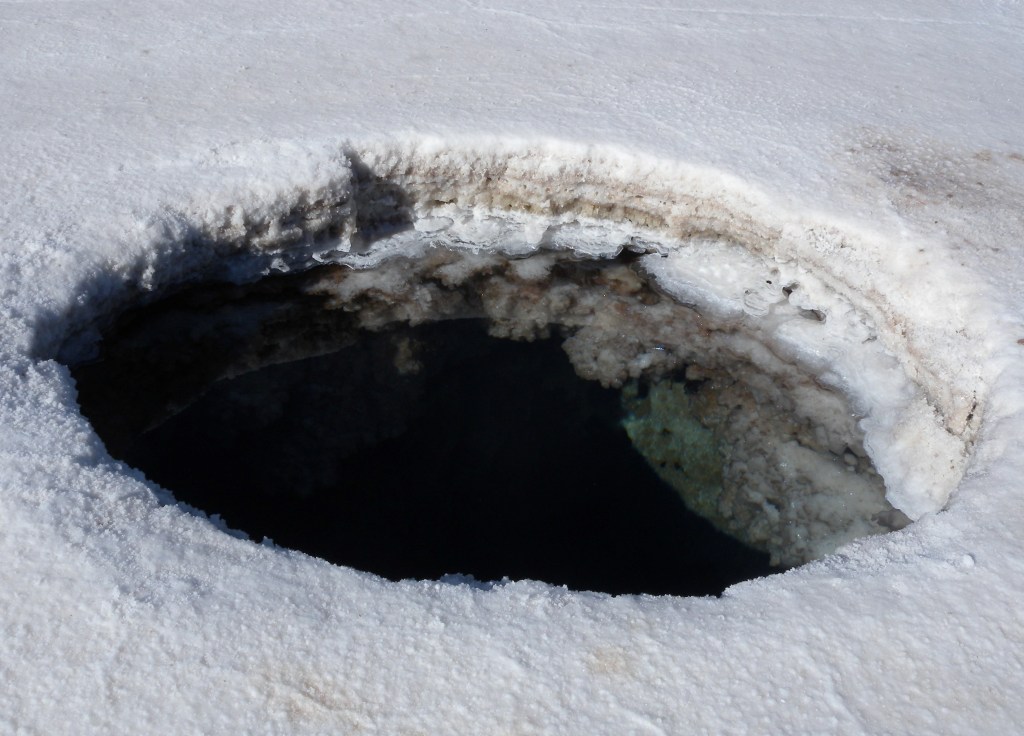
What is the point of a hole? A hole represents the lack of something; for example, the appearance of a pothole in a road often represents a lack of, or poor, maintenance.

I know that driving over, or dropping into, a hole in the road leaves me feeling very shaken and insecure if I haven’t spotted it in time. Sometimes dropping into a pothole can cause lots of mechanical damage to a vehicle and physical damage to its passengers.

And who wouldn’t feel insecure if half of their garden, or worse still, their home, suddenly disappeared into a sinkhole which had opened up in their garden or in the road outside? Larger, often highly publicised sink holes, which swallow up numbers of homes and vehicles almost literally take away the foundations of the lives of those affected. Fortunately, that’s never happened to me!

Image by Kurt Cotoaga @ Unsplash

Smaller holes be very frustrating too, as anyone who has found a hole in a favourite jumper or in their tights on the way to an important meeting or job interview will confirm.

Aren’t holes just annoying? We like and want things to be complete and a hole represents an absence – a lack of – something. It can also represent an emptiness. When someone dies, we talk about their passing having left a ‘hole in our life’ that seems impossible to fill. Holey things (things having holes), are not generally something that we want.

What about wholly though? A slight change of spelling and surely a much more positive word with its meaning of entirety and completeness? After all, a baby or young animal is wholly dependent on its mother during the first weeks of life; being nurtured, fed, cared for and protected.

Image by Hu Chen @ Unsplash

Despite my ‘butterfly brain’ which always wants to rush on to something else before I’ve finished what I’m doing, sometimes even I feel I’m wholly engaged with something. Usually that makes for much better results than I’d otherwise see!

Being wholly involved and focussed is a real positive for me and, when my Seasonal Affective Disorder (SAD) is causing problems, can stop me thinking about the SAD and preventing the depression from building.

So, while a hole can often be annoying, giving attention or care wholly can be a good thing.

What, then of holy which represents neither a lack of something nor a completeness but, simply, utter perfection? What connection do I have with that? What connection can I have with that concept?  How can I begin?

Holiness seems to imply a setting aside; a reserving of the best of myself for God yet with an appreciation that I will never achieve holiness through my own power.

I can see clearly the holes in my life: the weaknesses, the times I feel I’ve failed myself and others both past and present and the times when I’ve been too distracted to be wholly devoted to the pursuit of holiness. I’m such a very long way from utter perfection!

I’ve realised that while I can do little or nothing in my own strength, God can do everything. The more I’ve trusted in Him, the more I’ve begun to notice the holes in my life being filled by His Holy Spirit: the holes are always God shaped! It’s an ongoing repair job and there’s always a danger of my falling into sinkholes appearing from nowhere but life is a whole lot more interesting than it’s ever been!

(Do check out two brilliant ‘Holy’ songs: Exalt and Holy is the Lord from the amazing Martin Smith)